Permanent Roofline Lighting vs. Christmas Lights: You're Buying This Every Year Anyway
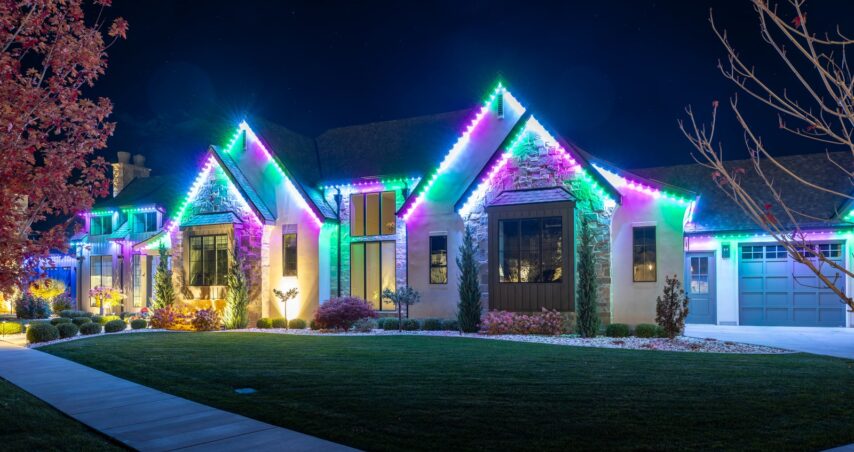
Every December, you buy new bulbs, dig out the ladder, string the lights, fight with the ones that don't turn on, and hope none of it falls apart in January. Then you take it all down, box it up, and store it for eleven months — just to do the exact same thing again next year.
That's not tradition. That's a recurring project you never signed up to repeat.
Permanent roofline lighting exists because that cycle doesn't have to happen. Install the system once, and your holiday display — and every other display the rest of the year — is one tap away, forever. No ladder. No storage. No re-buying the strand that died in a drawer since last January.
Here's how permanent roofline lighting actually compares to traditional Christmas lights, and why more homeowners are making the switch before this holiday season instead of after it.
KEY TAKEAWAYS
- Traditional Christmas lights cost you time and labor every single year — installation, troubleshooting, takedown, and storage.
- Permanent roofline lighting installs once and stays ready for Christmas, every holiday after it, and every ordinary night in between.
- Trimlight's patented channel hides the wiring completely, so there's nothing dangling, sagging, or visible in daylight.
- The Trimlight EDGE app switches your entire display from Halloween to Christmas to New Year's in seconds — no re-stringing required.
- Estimates are scoped to your property as a whole: whole house, front only, front plus additional sides, or ADUs — not a strand-by-strand guess.
- Every system carries a lifetime product warranty, plus a one-year labor warranty on the installation.
The Real Cost of Traditional Christmas Lights Isn't the Lights
The strands themselves are cheap. What's expensive is everything around them: the Saturday afternoon on a ladder, the extension cords snaking across the lawn, the bulb that's out in the middle of a strand and takes twenty minutes to find, the trip to the store for a replacement box, and the January afternoon spent doing the entire thing in reverse.
Do that every year for a decade and you haven't saved money by buying the cheaper lights — you've spent ten Saturdays on a display that lasts six weeks.
Permanent roofline lighting flips that math. The install happens once. After that, Christmas is a setting, not a project.
One Install. Every Holiday. Forever.
Trimlight's system goes into your roofline like it's part of the house — because it is. Once it's up, it's up for good. You're not re-hanging anything for Christmas, and you're not taking anything down in January either.
That means:
- No annual installation. The ladder work happens once, not every November.
- No seasonal takedown. Nothing to remove, coil, or store.
- No tangled bins in the garage. There's nothing left to box up.
- No dead strands mid-display. The system is built for continuous outdoor use, not a six-week seasonal run.
And because the same system runs your Christmas lights, it also runs your Halloween lights, your Fourth of July colors, and your everyday warm-white accent lighting. One install covers the entire year, not just December.
Traditional Lights Show Their Wires. Trimlight Doesn't.
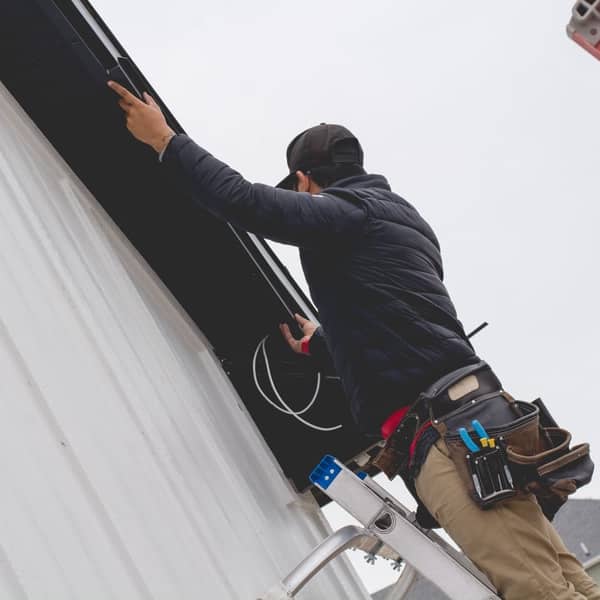
Even a well-hung strand of Christmas lights looks like exactly what it is: a strand of lights, taped, clipped, or stapled to your roofline, visible whether it's on or off.
Trimlight's patented channel houses the wiring and bulbs inside a low-profile aluminum track that's color-matched to your fascia or trim. During the day, it reads as a clean architectural line. At night, the light is the only thing anyone notices — not the hardware holding it up.
That's the difference between a house that's decorated and a house that looks like the lighting was built in from the start.
Change the Whole Display From Your Phone
How We Actually Estimate a Project
We don't estimate roofline lighting strand by strand or window by window — that doesn't reflect how these systems are designed or installed. Instead, we scope every project around the property as a whole:
- Whole house — full roofline coverage, front to back
- Front only — the elevation facing the street
- Front plus additional sides — for corner lots or extra street visibility
- ADUs — coverage extended to a detached unit as part of the same system
That keeps your estimate clear and the finished install looking like one cohesive system — not a patchwork pieced together one section at a time.
Built to Run Every Night, Not Just Six Weeks
Trimlight's bulbs use just 1 watt each in a 12-volt system, and they're built for continuous outdoor use — not a seasonal run that gets packed away before it has time to wear out. Traditional string lights are built to survive one holiday season at a time; Trimlight is built to survive all of them, every year, without replacement.
Backed for the Long Run
Every Trimlight system comes with a lifetime product warranty on the components, plus a one-year labor warranty on the installation itself. A labor fee applies for service needed after the first year.
Skip the Ladder This Year
If you're already dreading the annual install, that's the sign. Fill out our free estimate form here.
Trimlight East Bay serves homeowners throughout Alamo, Berkeley Hills, Clayton, Diablo, Concord, Lafayette, Livermore, Moraga, Oakland Hills, Orinda, Pleasant Hill, Walnut Creek, and the surrounding East Bay, Contra Costa County, Alameda County, and Tri-Valley areas.
Have additional questions? Text or call us at (925) 557-5925
One install, and every season looks effortless from here on out.
Blog Posts
Your local, authorized, factory-trained Trimlight dealer will guide you through the estimate process so you can start enjoying decades of worry-free permanent lighting.
Trimlight East Bay offers a discount to Veterans and First Responders.
Services
Company
Service Areas
Serving East Bay, Contra Costa County, Alameda County, and the Tri-Valley.
Hours
Monday – Friday: 9am – 5pm
Saturday – Sunday: Closed
Download Our App


Copyright © 2026 Trimlight East Bay
Powered by Trimlight East Bay